Monday, March 10, 2014

On the Wall

So I've got a lot of comics. Not as many as I used to have, having parted with about 2000 of them a little while back just to clear space in my house and to avoid moving them again. Those boxes are heavy. So while I don't have as many as I used to, I've still got boxes and boxes of comics that I've gotta find a home for, and where some of my coolest comics just sit inside a box and are never seen.

However, I want to see them. I want to show them off. And since showing off (and giving you ideas on how to show off on your own end) is the point of this blog, I needed to find a way to do that.

I mean, you can't exactly show off when your whole collection essentially looks like this:


21 long boxes of comics, while slightly impressive, is also an eyesore. Where do you put them? How do you avoid having 21 big white boxes stacked in a room? And how do you show off or even get a chance to catch a glimpse of any of the comics inside them when they're just hidden in the dark all the time. That's no way to appreciate a collection.

I mean, do people that collect those hideous collectible plates hide them? Hell no. They show that shit off! Even if nobody in their right mind wants to see it... but they SHOW THAT SHIT OFF!

So if you're like me, you're wondering "How do I even start showing some of these off? And which do I show off?"

A quick browsing through my collection brought me a couple books that, while not good enough to be sent off for CGC grading (something I'll get into in a later blog), were pretty awesome to look at, have historical value to other comic fans, and were in pretty good condition.

I pulled out about 5 books that I thought fit this bill. I picked out:

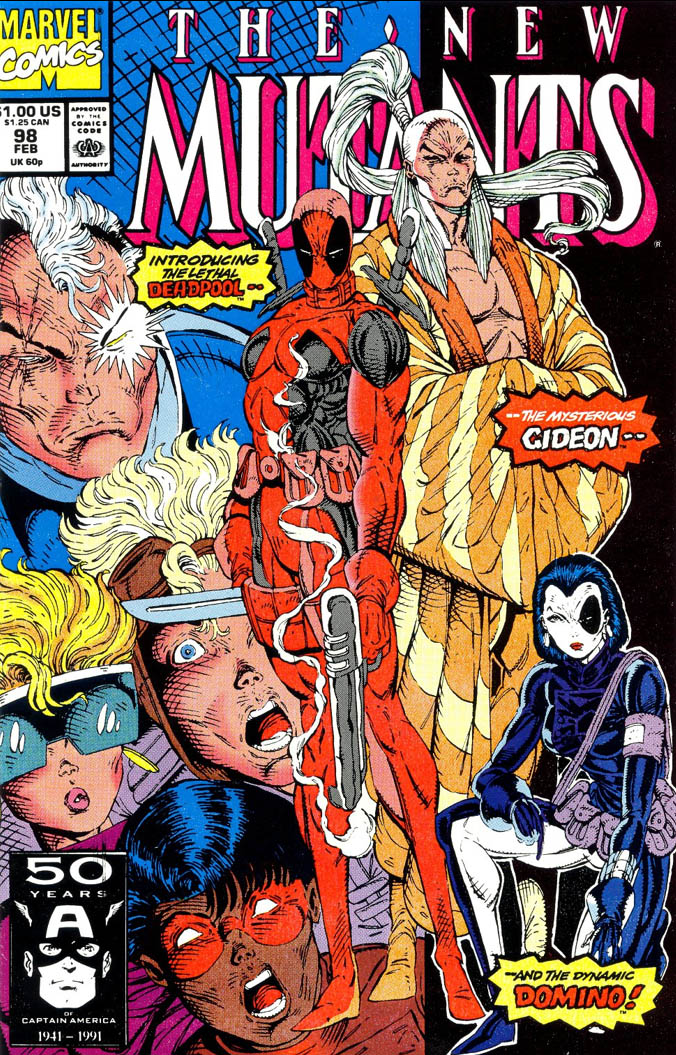
Uncanny X-Men 141, Uncanny X-Men 142, New Mutants #98


The final 2 books that picked were signed by a favorite (but dearly departed) artist by the name of Michael Turner. Soulfire #5C Supernova Variant and Shrugged: Beginnings Pittsburgh Comic Con Limited to 750 variant.

While the Uncanny X-Men and the New Mutants had some monetary value due to their historical significance (The Uncanny issues were the Days of Future Past storyline that the upcoming movie is based on as well as just being a really cool story, and the 1st appearance of Deadpool in New Mutants), the 2 Michael Turner books were picked simply because they were just cool looking covers. And they were signed which is also a nice little novelty, even if it doesn't really help the value that much.

I suggest that anyone picking out books that they'd like to try a project like this with, picks books that they like the cover of, books that have monetary value, or those that have a historical significance to the comic book medium. Even if it's something as simple as the first appearance of your favorite character or something like that. And the best part of this project is that you can swap out the books if you want to change it up in about 5 minutes.

Now the question was... what do I do with these books? I've pulled them out but wanted to do something with them. That's when I got the idea that it might be cool to frame them. But I'd have to find frames that actually fit a comic book. And 7'x10" frame isn't exactly normal sized but an 8.5 X 11 seemed to be a very common frame size. I opted to go with that and do some sort of matting around it. But frames are expensive. Even cheap ones, are pretty expensive. And while these were nice comics, they weren't really worth that much effort. 

Thankfully, DollarTree had 8.5"x11" document frames for diplomas and the sort for (obviously, because it's Dollar Tree) $1 each. This was a much more reasonable option than finding actual comic sized frames which can be relatively expensive and difficult to find in an actual brick-and-mortar store; or buying something nice from Michaels or a craft store and paying upwards of $10. This was supposed to be a cheap and quick project. And $1 picture frames are exactly the kind of cheap I was hunting for this project.

Since the comics don't fit perfectly in dimensions and the cardboard backing to the frame is exposed, I wanted to do something to clean it up and opted for some sort of matting. I went for simple black cardstock/poster board. The thin floppy kind, but solid enough to not tear or fall apart either while still covering the cardboard and making it look a little nicer than a cheap plastic dollar store frame.

I opted to keep the comics inside their acid-free bags and with their backing boards intact over removing them, however you could probably do either way. I didn't like the idea of the comic potentially shifting in the frame and blunting the corners any more than they already were, and also liked that the way that added thickness of the bag and board helped keep pressure both on the glass in the front and the rear board of the frame at the same time, thereby reducing potential shifting of the comic inside the frame, since it's an oversized frame and the matting is simply sitting behind the comic, rather than overlapping any of the edges in the way it would with a higher-end piece of art. But it's up to you how you want to do it. But fair warning that since the comics aren't secured in any way inside there (and doing so would damage the books), your only hope of keeping a comic secured is with the pressure pushing on the front and rear of the book by the glass and cardboard backing. So any extra thickness, as long as it's within reason, that adds to the pressure there couldn't really be considered horrible.

I simply cut the cardstock to size, using the cardboard backing of the frame as my stencil rather than bothering to measure. 1 36" sheet of standard cardstock that you'd get from Michael's made enough mattings for 6 frames with a little left over.

After cutting the cardstock, I laid the comic against the glass of the frame, face down, and centered it as best as I could without securing it in place. I then laid the cut cardstock into the frame and then re-attached the cardboard backing of the frame and secured the folding tabs on the back of the cheap frames. If there's some bulging and the folding tabs don't push all the way flat against the back of the frame, don't worry. It's OK and I had the same issues. Just be careful that you don't crack the glass by trying to get them too tight. As long as they're mostly re-secured, you'll be fine.

After that, I simply found a space to hang them.

I picked this space because I liked the aesthetic of the straight line of comics top to bottom and the way that the smaller picture size of a framed comic fits with the skinny wall space here. Plus, there were already centered and properly spaced hanging nails to do it. So it appealed to my lazy size too. I told you this was a quick & cheap project. This was Uncanny X-Men 141 and 142. I have space above and below to add at least 1 above and 1-2 comics below these and I think that doing issues 140-145 might be cool. And this skinny span of wall really works for that.

Here's a list of the supplies you'd need to do this project:

Comic books in bags & with backing boards
$1 each for the 8.5"x11" frame from Dollar Tree
$2-3 for a 36" sheet of cardstock/poster board (enough for 6 frames)
Scissors or exacto knife
Pencil
Hammer & small penny-nails.
Tape measure
Level
Optional: Straight edge or ruler

I don't recommend using picture hangers for this project since the idea is to get the frames to hang as flat as possible and picture hanging hooks would just make them tilt forward a little too much with something like this. A penny-nail is all you really need. The frames have a hanging loop on the back with teeth to grip the nail head.

Tuesday, March 4, 2014

Intro to Finding & Buying Comic Art

Now, this is a subject that might be a little meandering, but a friend suggested that I write a little something about actually buying some art. I thought about this a little bit last night (read: 15 minutes) and then decided to just write whatever popped into my head on the subject whenever I sat down and fired up the intartron machine to wordify for you.

I don't really put much forethought into anything. Sorry. Fair warning. If you want something that's thought out and really deliberate? Well, you gotta just look somewhere else. If I think farther than a paragraph ahead, you're getting the really REALLY considered & deliberate thoughts. Sorry.

So back to the real question:

How do you GET art to decorate with?

This is a question that, at first, I thought was pretty straight forward: "you go and you buy it?" but after the 2 minutes that I thought about it, I realized that there's thousands of other things that need to be considered before handing someone your credit card or a fat wad of cash and them handing you a thing that you hang on your wall. I realized that, in order to answer a question as simple as "how do you get art to decorate with", you've gotta answer about a dozen other questions.

(I'm going to simplify this a little bit and keep my responses strictly towards stuff that's already read-made for being hung on a wall like a piece of art and not some of the more creative things that I've been doing/thinking about when it comes to actual physical comic books.)

First of all, how much money do you have to spend? This is a question that's going to determine whether you are buying original art or prints. Do you have hundreds or thousands of dollars that you're willing to part with in the right situation? Then original art is at least an option. But if you've got $31 and an old battery in  your wallet to get 2 pieces of art to fill some wall space, then prints are really your only option.

Why do I have an old battery in my wallet?
Original art is stupid expensive. How expensive it is has a lot of variables: from the name of the artist to the popularity of the character to how important the story arc was to something as simple as which characters are on the page. It can vary from $60 for a piece with art from Joe No-Name that's got 'Random Z-list characters 1, 2 and 7 only" appearing on that page or it could be a 7-page fold-out spread by Bryan Hitch from the Ultimates for $20,000 (no joke, I've seen stuff sell for this much or more). So there's kind of a lot of range in prices. But it seems that most pieces of interior work are going to go for about $200-500 and covers averaging from $800-2,000. Depending on title, artist and characters.  But the point I'm making is that unless you're in love with Joe No-Name Artist or Random Z-Lister 3, then you're probably going to be paying at least a little bit of cash for anything that you'll want to look at.

Prints, on the other hand, generally run in the $10-30 range. Much more reasonably priced.

So after you've decided on your budget, you've gotta look at genre. I'm really only going to cover comic book art here because while my friend asked about original art in general, she also asked about fantasy art and I'll be honest, I've got fuck-all knowledge about fantasy art. I probably couldn't name a fantasy artist if you put a gun to my head and I have no idea what the supply/demand tables look like for that to even hazard a guess. If you've got any sort of knowledge on fantasy artists, feel free to post information in the comments section or write something up and I'll give you a guest-blog credit.

But for comic book art, you've still got genres to consider. Are you talking superhero or indie or crime noir or cartoon-style? Are you looking for just anything with Batman? Or do you really have an affinity for Ghost World, The Walking Dead or Peter Panzerfaust? Maybe you skew more towards old-school Archie comics and just want to get some of that Betty/Veronica hanging on the wall? Or is your mind in the gutter and you want some sort of slashy Iron Man/Cap stuff? Yes, @EverybodyILoveDies, I'm looking at you. But you need to start narrowing down what you're looking for and this is a good place to start.

There's also the question of if you are looking more for a character or an artist or a combination? Do you just want anything Superman related or do you just really like Gary Frank's art? Or do you like his art a little bit but love it when he's drawing Superman? I know that I have this stupid love for an obscure Wildstorm/DC character called Grifter. But I also only really liked him when drawn by Dustin Nguyen or Talent Caldwell. So when I started original art hunting, those were my criteria. I wanted Grifter art but only by those 2 artists.

Once you've figured that out, it's time to go shopping. But where do you shop? There's not exactly an "original comic book art" store at the mall and there's not a section in your LCS (local comic shop) for original art. But all is not lost. There's options.

A guide to the differences between different types of original
art that you can buy.
1. If you live close to a city that has a comic book convention, this is a good place to pick up some original art or even prints. Depending on the format of the convention, most times, there will be a section called Artists Alley where artists will be available for autographs, commission sketches or to sell both their original art and prints of certain pieces of art. This is a good place to connect with artists and consider your buying options. You can buy the cheapish print of a piece and have them autograph it and hang it in your front entry hall. Or you can get a commissioned sketch of whatever you want for a price. They will also often have books filled with their original art that is available for sale.

The thing about comic book artists is that, when they're working on something like Batman or the X-Men, they get paid a page rate to draw it, but they also get their original work back from Marvel and DC. Sometimes they'll split pages with their inker, since they do almost as much work, and then they sell that original art to supplement their income. There's a reason these guys are called starving artists. They gotta eat, man. So they sell their original art for far more than they were paid to draw it in the first place and you can flip through their books to find that one page that you want. Or in my case, the 27 that I want, the 14 that I could theoretically afford if I really pushed it, and the 1 that I need to actually settle on because the bank would send out a hunting party for me if I tried buying more than that.

When you take this route, it allows you to talk to the artist and negotiate the price a little bit more. Most of the time, artists do not price their art in their portfolios, so you don't get the luxury of seeing the price tag before asking. This gives the artist the upper hand from the first second of any negotiation. If they like you, they might start with $100 knocked off the price they'd quote to someone that they don't like. Not saying many artists will admit it, but it does happen.

Also, don't be reluctant to negotiate the price. Artists will negotiate and don't be too afraid to walk away if the price is still a little too rich for your blood. A few hundred or thousand dollar purchase price is always a negotiation, no matter what the car dealership tells you about their "no haggle pricing". You can always haggle if you're willing to walk away.

But the convention does allow you 1 other option that you didn't have before and won't have with the other options. Commission sketches. Sometimes a commission sketch gives you that original art feel without the original art page price. This also allows artists to draw characters that maybe they've never had a chance to draw before since they're often getting paid a page rate by Marvel or DC. Or maybe they just have a character that they really like drawing.


Sorry for the shitty picture. I need to find
a better photo of this. It's also something that
I plucked out of the internet dust bin taken
6 years ago on a crappy camera. This was an
undirected convention sketch where the artist
was free to draw whatever he wanted.
I ran into an artist whose work I really dug a few years back and handed him my sketch book for a commission. When he asked me what I wanted, I told him it was his pick and to go nuts with whatever he wanted to draw. I stopped back a few hours later and, expecting a quick sketch for the $20 I paid and he'd given to others, I found a whole-page city-scape of Batman in Gotham. It was exceptional.

So that's a little trick for you. If you dig an artist but not necessarily their work on any character? Let them go nuts. They'll do amazing work for 1/4 of the price they normally would charge for a sketch.

2. Art dealers. Most of your bigger artists have an art dealer that they go through. Again, I'm just focusing on superhero comics here, but there's a handful of art dealers that handle selling the original art for some of the top-100 or 200 artists working in the superhero field. A quick google search brought up these 2 dealers:

Albert Moy Art    Splash Page Art

Unlike the interior page shown above, in this case,
the story was changed & the top (inked) panel was
used while the bottom half of the page was re-drawn.
As a result, it's a partially published interior page.
I've bought from both of these dealers and while you can't expect much in the line of negotiating options, they have a pretty good selection and will work with you to a degree on stuff that's been sitting for a little while now. They're total pros and treat comic art as they would a museum piece by Monet. They don't look at comics as some sort of low-brow artform and treat both the material and the art itself with complete respect. Bonus is that they also sometimes send out exclusive offers for cheaper works such as preliminary sketches for future works by their client artists if you're on their e-mail list. I might have jumped on one of those offers before.

Now as I said, you won't have nearly the same negotiating strength with the dealer online than you would with the artist themselves at a convention, but you can still negotiate a little bit.

3. Other fans. Want an older piece that you can't find through the dealers? Really want to find that double splash page of the X-Men vs the Imperial Super Guardians from way-back in Uncanny X-Men 275? Of course, you can try eBay but I'll give you dollars to donuts that you won't find it there. And you could try asking the artist or dealer who bought it so you could try to buy it off them, but it's unlikely that they'll tell you even if they have the records. But there's one place on the internet that gives you the best chance of finding that piece and getting in contact with the owner. Comic Art Fans is essentially a social network for people to show off and register (as much as there is a registry for this kinda thing?) their original comic art. And once you track down the piece on there, if it's on there, then you can try to contact the owner and work out a price if they're willing to part with it at all.

Comic Art Fans also has a marketplace for pieces that their members are actively selling. It essentially works like eBay's Best Offer option, and also has eBay integration for you to link to auctions on there. It's probably the best way to find and buy original art from people other than art dealers or the artists.

So that's about it. That about covers the rough introduction to finding and buying comic art. Thanks for reading & I hope this was helpful in some way. I'll try to replace a couple of these pictures with better photos when I get home since these were the only ones that I could find as I started writing this. (What part of "I don't plan ahead" didn't you understand?)

Monday, March 3, 2014

Old School

As I mentioned in the previous post, I started picking up some art and just HAD to hang it up. So I had them all matted and framed & hung them in a small studio apartment I had at the time.

Because they were all pencil/partially-or-fully-inked on white paper, I felt that a simple black matting with a silver frame would work best.

This is the result:


I know it's not the greatest picture, but it worked at the time. I didn't have a boatload of space and that was really the only wall that it seemed to have the space for everything and it not seem cluttered. So that's what I ended up with. Sorry for the crappy photo. I had to dig this out of the dust bin of the internet to even find any record of my first attempt at using comic art to decorate beyond hanging posters when I was 11.

Now that I've had my house for a little while and am figuring out this decorating thing a little better and coming up with new ways to display (read: show off) my geekdom, I'm getting better ideas and I've also accumulated more things that deserve to be shown off.

Soon, I'll start posting pictures of what I've done so far as well as the slow evolution of the changes I'm making to decorating with comic art.

Welcome

I've been a comic book fan since I was 10. And if you've found this blog, you probably are a fan too.

I've also long been both an artist and a fan of art (really? does that even need to be mentioned?), especially comic book art. When I was younger, I followed the "hot artists" like virtually everyone else in the late-80's/early-90's.  But as I've gotten older and the styles of comic book art have become more varied, from highly stylized to photo-realism to quick and simple and everything in between, I've really started to appreciate all of the different ways that comic book art could be used as a way to decorate.

I started out by diving into the deep end and acquiring some original art from artists that I really liked when I'd run into them at conventions. There was something really appealing about buying the original pencils from the cover of a comic, even if it wasn't a horribly popular one (Wildcats Nemesis #5) by an artist that I really liked (Talent Caldwell) and hanging it up on my wall to see it in its raw form. I had it framed and matted and soon after, picked up another piece from the same artist. I then ended up finding a great deal on a good interior page and on and on until very quickly, I had blown through a couple grand and had a few too many pieces of art for my little studio apartment.

Over time, and as wall space provided, I've picked up some prints and other pieces of comic art that were designed at least generally to be hung as wall art. But I realized something... the original art and the prints and everything were great, but I'm buying pieces of art regularly with the individual issues. Why would the raw pencil art of the cover be "art" but the polished and printed version not be? Because it was only 7 5/8"x10 1/8" instead of 11"x17"? What's keeping me from hanging up or displaying the individual issues somehow? Why shouldn't they also be used as a piece of art to decorate my house?

So that's what I'm dedicating this blog to. Comic art of all kinds. It could be an old-school poster or a framed piece of original art or the way you or I display a 3,000 or 10,000 comic collection. I'll be posting some of the things that I've done or hung or whatever in the next few weeks and some descriptions of what I've got planned or how I did this thing or that, in case you wanted some ideas for your own home. And if you've got your own suggestions, feel free to submit them and I'll write them up for you.

Because I think we can all agree that Comics Are Art